
Hiring a translator in the Philippines can look deceptively simple.
You have a document. You know the language you need. You find someone who speaks it, agree on a price, and get the translation back.
But what happens when the document is legal, medical or technical? What if it contains confidential information? And what happens when you suddenly need the same content in five languages—or an interpreter for an important meeting?
That’s when choosing a translator becomes less about finding someone who speaks the language and more about finding someone who understands what your business actually needs.
So, what should you look for when hiring a translator in the Philippines?
Let’s take a closer look.
1. Start With the Language Pair
“English translator” isn’t specific enough.
Are you translating English to Filipino? Filipino to English? Japanese to English? Korean to Filipino? Mandarin to English?
The translator should have proven experience in your exact language direction. Being fluent in both languages doesn’t automatically mean someone is an effective translator.
And depending on the project, cultural knowledge can matter just as much as vocabulary.
2. Do They Understand Your Industry?
This is one of the biggest differences between a good translation and a professional one.
A medical document requires different knowledge from a software manual. A legal contract is different from a marketing campaign. A technical document may require familiarity with highly specialized terminology.
You should be able to ask:
“Have you worked on projects like mine before?”
But there’s another question worth asking:
“How was that expertise verified?”
When you hire independently, you’re often responsible for making that assessment yourself.
A professional language-services provider should take on that screening process—evaluating linguists not only for their language capabilities, but also for the subject-matter expertise required for the assignment.
3. How Is Quality Checked?
Translation shouldn’t necessarily end when the first draft is finished.
Professional workflows can include revision, proofreading, terminology checks and quality evaluation.
For translation services, ISO 17100:2015 establishes requirements for the processes, resources and other aspects necessary to provide quality translation services.
For interpreting services, ISO 18841:2018 provides general requirements and recommendations.
These standards are useful reference points because they shift the conversation from:
“Is this person fluent?”
to:
“Is there a professional process behind the service?”
4. Don’t Choose Based on Price Alone
Yes, translation costs vary.
The price can depend on the language pair, subject matter, complexity, volume, turnaround time and level of service required.
The cheapest quote isn’t necessarily the cheapest solution.
A poor translation can create rework, delays, customer confusion or reputational problems.
The better question isn’t:
“Who is cheapest?”
It’s:
“Who can deliver the quality and reliability I actually need?”
5. What Happens to Your Documents?
This is particularly important for businesses.
Contracts, customer information, financial documents, product specifications and internal communications can contain sensitive information.
So don’t just ask who will translate your documents.
Ask how the entire workflow is managed.
Who has access? How are files handled? How is communication organized? What controls are in place to protect sensitive information?
A professional language operation should provide a controlled environment rather than leaving important files and conversations scattered across email, messaging applications and personal devices.
Security should be part of the workflow—not an afterthought.
6. What Happens When Your Requirements Change?
Maybe today you need one translator.
Next month, you need Japanese. Then Korean. Then website localization. Then subtitles. Then an online interpretation session.
This is where relying entirely on a single freelancer can become difficult.
Availability, specialization and capacity can change from one project to another. If your regular translator is unavailable—or doesn’t have the expertise required for a new assignment—you may have to start the search all over again.
A professional language operation should provide continuity.
When an urgent requirement arises, the provider should be able to identify and coordinate qualified linguists who match the required language, subject-matter expertise and assignment requirements, subject to availability.
You shouldn’t have to rebuild your language team from scratch every time your requirements change.
7. Think Beyond a Single Translation
For a one-off document, hiring a freelancer may be perfectly appropriate.
But if language is becoming a recurring part of your business, the requirements can quickly expand beyond translation.
You may need localization, subtitling, online interpretation or ongoing support for teams working across several languages.
At that point, you’re no longer simply looking for someone to translate a document.
You’re building a multilingual capability.
So Where Does Etranslation Fit?
This is where the criteria above become important.
Etranslation is an ISO-certified language-services provider for translation and interpreting, with a model designed to take the planning and coordination burden away from You.
Instead of leaving the organization to find, evaluate and coordinate a different freelancer for every requirement, the language operation handles the screening and qualification of linguists according to the needs of each assignment.
Behind that operation is TranslatorsHub, Etranslation’s working platform for managing translation, localization, subtitling and Interpretation.
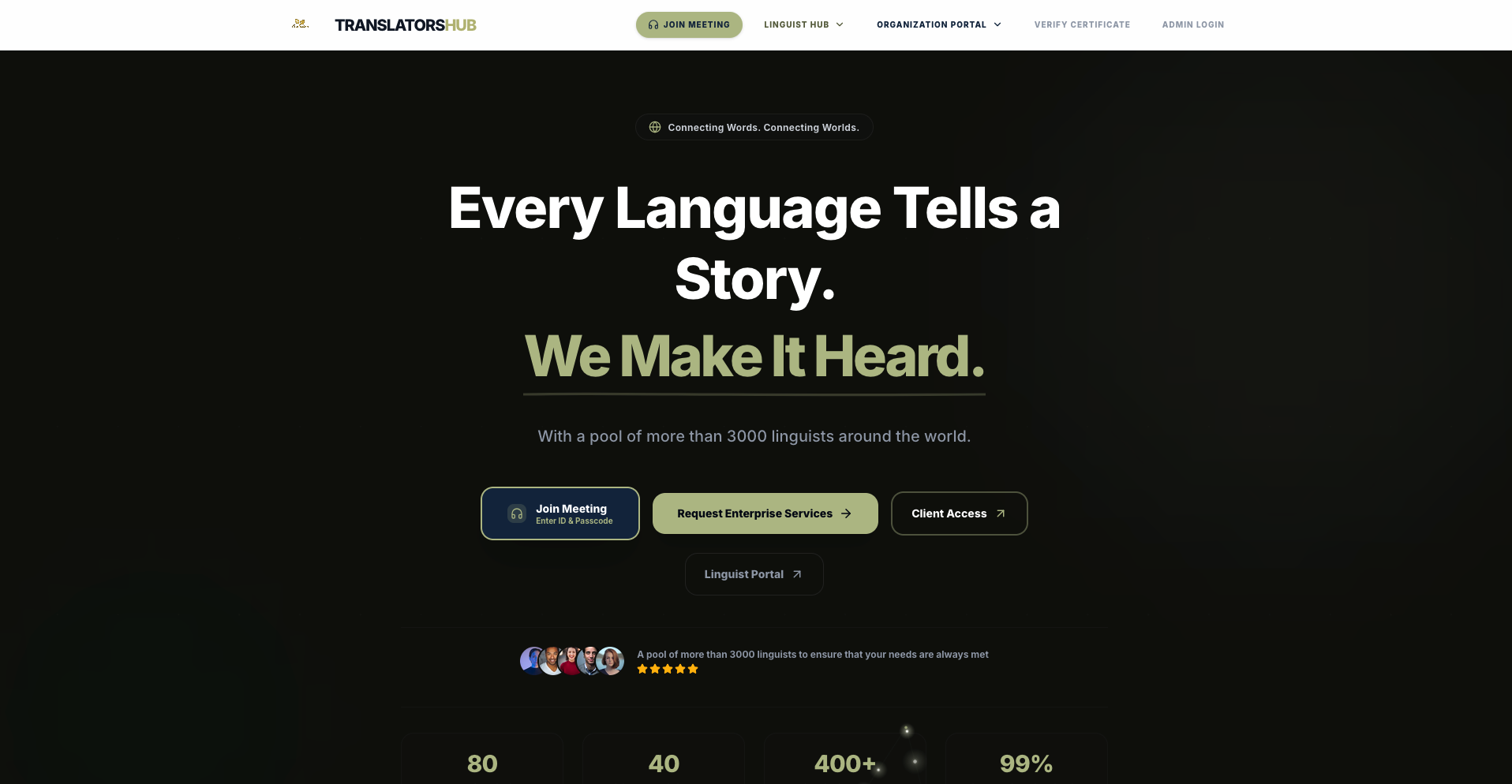
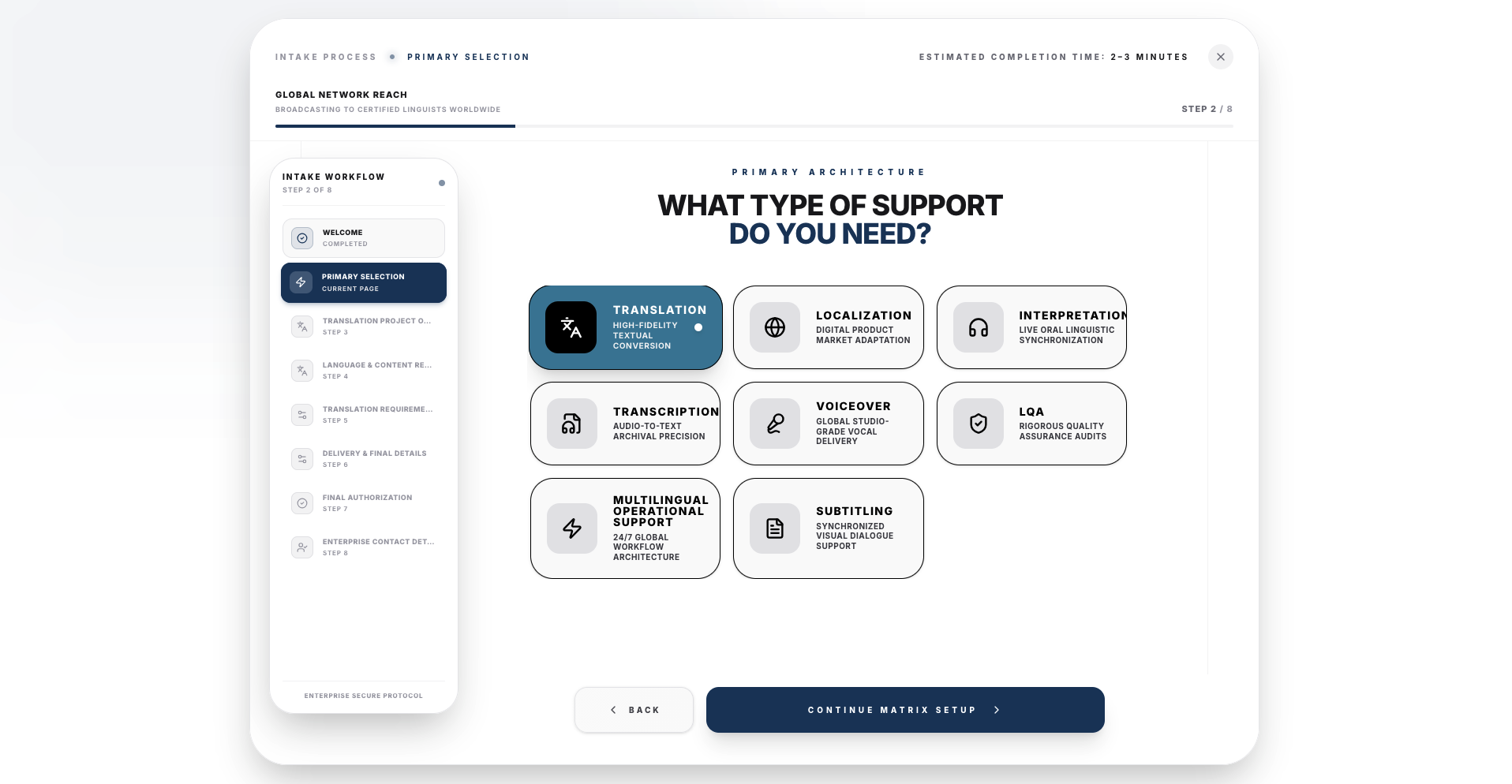
Organizations submit their language requirements through TH and receive updates as projects and sessions progress. The platform also provides a structured environment for communication, project management and the handling of sensitive information.
For organizations managing several languages internally, the support doesn’t have to stop with individual projects. Ongoing language support can provide additional coverage when live interpretation requirements arise, helping teams avoid having to repeatedly search for appropriate support themselves.
The difference is simple:
You don’t have to manage the entire language operation yourself.
The planning, screening, coordination and ongoing support are built into the way the service works.
The Bottom Line
When hiring a translator in the Philippines, don’t make your decision based only on language, price or availability.
Look at the bigger picture:
Who screens the linguists?
Who verifies their expertise?
Who manages the project?
How is your information protected?
What quality process is in place?
And what happens when your requirements suddenly change?
Because the real value of a professional language-services provider isn’t simply access to a translator.
It’s having someone take responsibility for the language operation around the translation.
That’s where Etranslation’s model makes a difference.
With ISO-certified translation and interpreting services, a structured operational platform in TranslatorsHub, and the ability to support organizations across translation, localization and interpretation, the goal is not simply to deliver one translated document.
It’s to make managing language easier, safer and more reliable as your needs grow.
Need a translator in the Philippines?
Tell us what you need translated, the languages involved, your industry and your deadline.
We’ll take care of the language planning and help determine the right solution for your requirements.
Can’t tell the difference between Translation and Localization ? Read our post here!

 French
  English
Aucune réponse