
Everyone hears the speaker.
Everyone understands the message.
When people speak different languages, communication should not stop. Professional interpretation helps people listen, understand and respond in real time.
One message. Different languages.
The interpreter doesn’t simply translate words.
An interpreter listens to the speaker, understands the meaning, considers the context and delivers that meaning in another language while communication continues.
Receive the speaker’s message in real time.
Process meaning, context and terminology.
Reproduce the intended message naturally.
Keep the conversation or event moving.
Different languages should never have to mean
different access to the same conversation.
The Forms of Interpretation
Not every conversation
needs the same kind of interpretation.
The right interpretation mode depends on the setting, the number of participants, the pace of communication and how the audience needs to receive the message.
Simultaneous interpretation
Simultaneous interpretation is designed for situations where the audience needs to follow the speaker without waiting for the speaker to finish each thought. The interpreter listens and delivers the message almost continuously in another language.
The speaker keeps talking.
The interpreter works alongside the speaker, allowing the audience to follow the message with minimal interruption.
How Is The Interpretation Performed ?
Interpretation can happen
wherever communication happens.
A meeting can happen in a room. A conference can happen online. A participant may need video, while another may only need a phone. Interpretation can be adapted to the environment in which people communicate.
In Person Interpretation
The interpreter is physically present with the participants, working within the environment where the communication takes place.
Different environments.
The same goal.
Whether people are sitting together in the same room or joining from different locations, interpretation exists to keep communication moving between languages.
The delivery environment changes. The need for clear, accurate communication does not.
Interpretation can adapt to the way your event works.
The question is not only
“Which language?”
It is also: “How does your audience need to receive it?”
What does a multilingual event actually require?
An interpreter is
only one part of the operation.
When an event brings together people who speak different languages, interpretation becomes part of a larger operation involving people, technology, terminology, audio and coordination.
Interpreters
Professional interpreters listen, process and deliver meaning in another language while the event continues.
You see the interpreter.
We see the operation.
Professional interpretation depends on the people delivering the language and the systems supporting them. Our role is to bring the linguistic and operational pieces together around your communication requirements.
Your event has requirements. We know how those requirements affect the operation
A successful interpretation project starts long before anyone speaks.
The interpreter is visible when the event begins. But the work behind that moment starts much earlier. Languages, format, audience, terminology, technical requirements and schedules all need to come together.
Speaker
Original message
Interpreter
Simultaneous delivery
Audience
2 language channels
Languages
Language combinations determine the interpretation setup.
Mode
Simultaneous interpretation keeps communication moving in real time.
Environment
In person, online and hybrid formats create different operational needs.
Coordination
The event format helps determine how people, schedules and resources come together.
What looks simple to the audience can be complex behind the scenes.
Professional interpretation is not only about finding someone who speaks the language. It is about preparing the right linguistic and operational setup for the way people will communicate.
Live Event Control Room
Live interpretation does not always go according to plan.
Speakers change slides. Sessions run longer. Participants join remotely. Terminology changes. A language may be added. Technical issues can appear without warning. A professional interpretation operation has to be ready to respond.
Speaker
Main stage
Operational response
New terminology has appeared in the presentation.
Updated presentation material can help the language team understand new terminology and maintain consistency during the session.
How The Interpreter Works?
Different situations. Different communication needs.
Interpretation is used wherever people need to communicate across languages in real time. The setting changes. The participants change. The subject changes. The need for clear communication remains.
When the audience needs to understand the speaker in real time.
International conferences can bring speakers, participants and organizations together from different linguistic backgrounds. Interpretation helps communication continue across those language boundaries while the event moves forward.
Speaker
Presents the original message.
Audience
Receives the message in their language.
Simultaneous interpretation, language channels and event coordination.
Timing, terminology, audio quality and communication flow.
In person, remote or hybrid depending on the event.
The setting changes. The responsibility remains.
Whether the audience is sitting in a conference room, joining an online meeting, participating in training or meeting a delegation, interpretation has one fundamental purpose: helping people communicate when language could otherwise become a barrier.
The Preparation
The interpreter starts working before the event begins.
A speaker may spend hours preparing what they are going to say. The interpretation team needs enough context to understand it before it is spoken. Presentations, terminology, agendas, subject matter and audience all help build that context.
Asia Pacific Technology Forum
This is where interpretation preparation begins. The more the team understands the communication environment, the better prepared they can be for the language and terminology they will encounter.
What does the team need to know?
Understand the subject before the speaker starts.
Interpretation takes place in real time. Having context about the subject matter helps the interpreter understand terminology, concepts and the direction of the discussion before the information reaches the audience.
Understand
Prepare
Interpret
Review
Deliver
Preparation does not replace expertise. It gives expertise the context it needs.
Professional interpreters bring language expertise and real time processing skills. Good preparation gives them the information needed to work with the terminology, subject matter and communication environment of a specific event.
The Communication Environment Changes The Communication
Same goal. Three very different environments.
Interpretation can take place inside a conference venue, through a remote environment or across both at the same time. The communication objective stays the same, but the operational requirements change.
The room becomes part of the communication system.
At an in person event, interpretation operates within the physical environment. The room, speakers, microphones, booths, receivers, headsets, language channels and audience layout can all become part of the setup.
Direct communication within a physical venue.
Microphones, interpretation equipment, receivers and audio channels may be involved.
People, equipment, room setup and event schedule need to work together.
Multilingual meetings can have their own communication environment.
For online and hybrid language services, TranslatorsHub provides meeting room capabilities designed to support multilingual communication and the coordination around it.
MEETING
The technology changes. The communication still has to work.
Choosing between on site, remote and hybrid interpretation depends on the event, participants, languages, environment and technical requirements. The right setup is the one that allows the audience to stay focused on the conversation.
Who Takes All The Credit
An interpretation project is a team operation.
The interpreter may be the person the audience notices first. Behind that person, however, there can be project coordination, preparation, terminology work, technical requirements, scheduling and communication. All of those elements have to work together.
The interpreter is at the centre of the communication.
Professional interpreters listen to the source message, process meaning in real time and communicate it in another language while the event continues.
Interpreter
Processes and delivers meaning.
Project team
Coordinates requirements and people.
Terminology
Supports specialist language.
Technical layer
Supports the audio environment.
Quality
Reviews requirements and consistency.
Event
The final communication environment.
Language expertise in real time
The interpreter’s role is not simply to replace one word with another. They listen, understand context, process information and deliver the intended meaning in another language.
- Language combination
- Subject matter
- Event format
- Audience needs
The coordination layer can be digital too.
TranslatorsHub supports the organization around language projects and includes meeting room capabilities for multilingual online language services. It helps keep communication, project information and workflow organized around the service.
You hear the interpreter. We manage the operation behind the interpretation.
From selecting the appropriate language expertise to coordinating preparation, terminology, technical requirements, schedules and delivery, professional interpretation is built as an operation rather than a single isolated service.
See For Yourself
Real events.
Real interpretation.
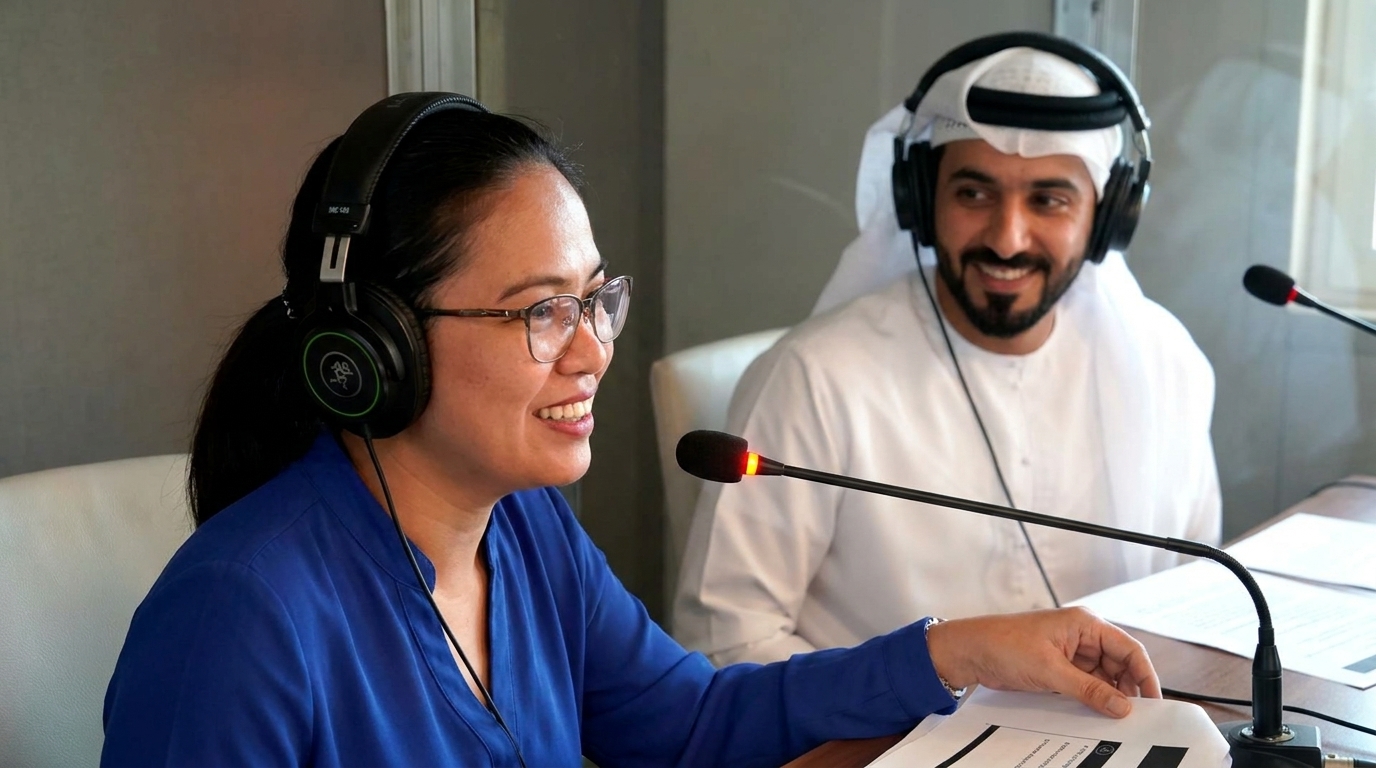
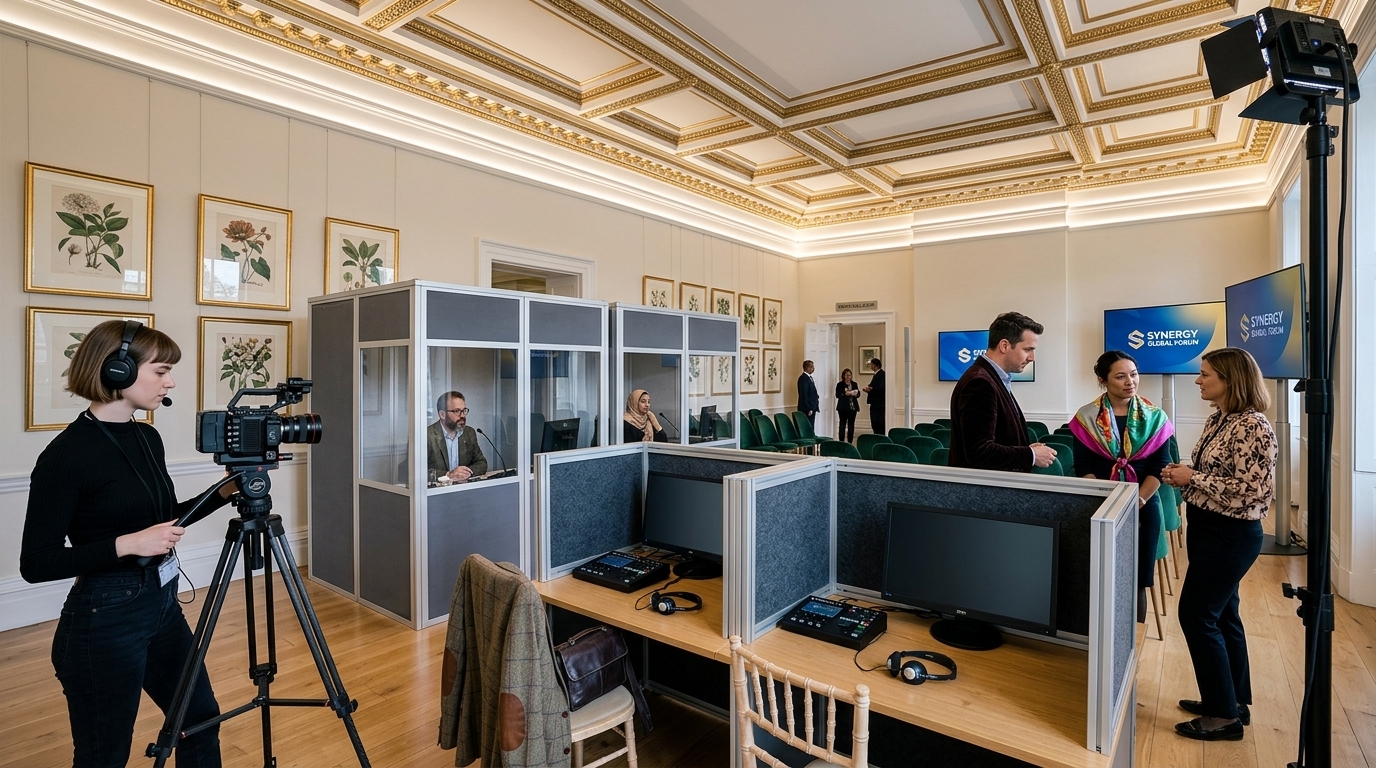
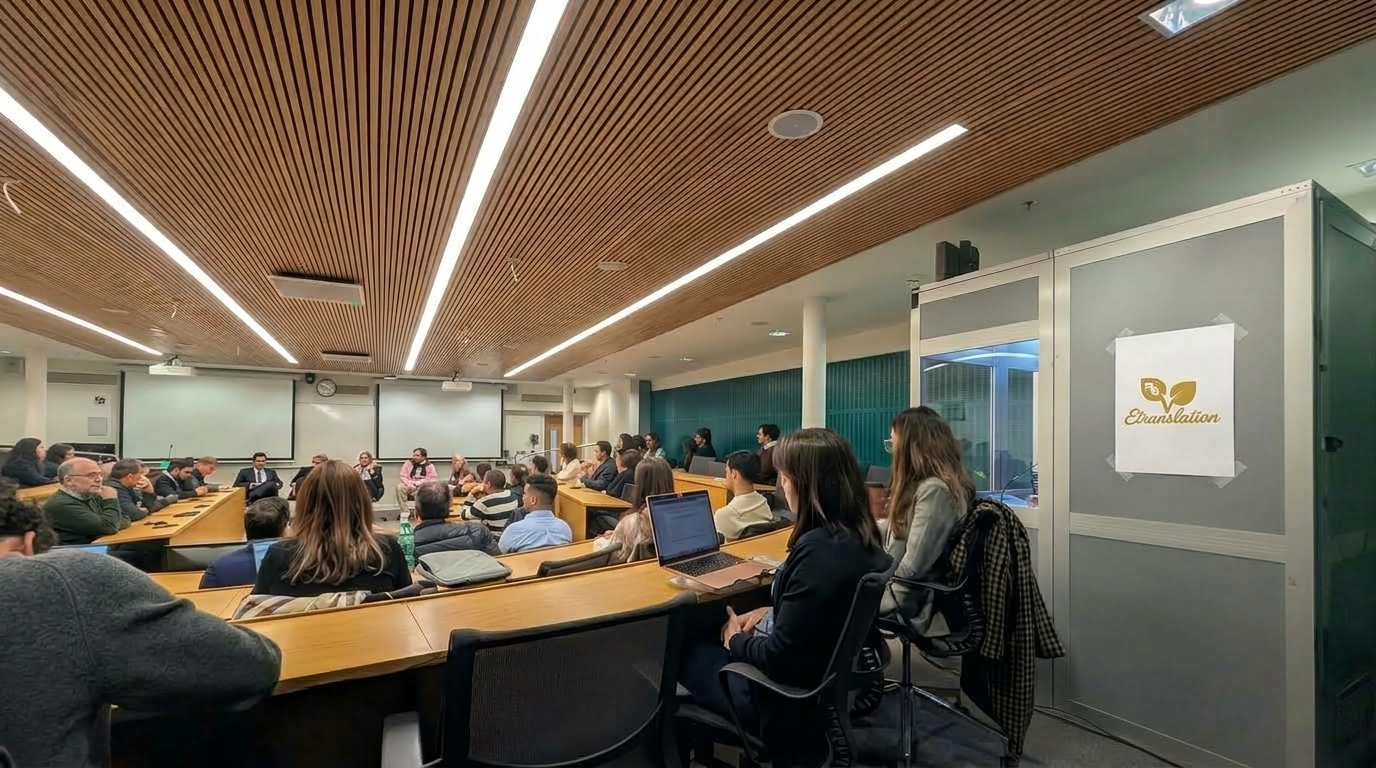
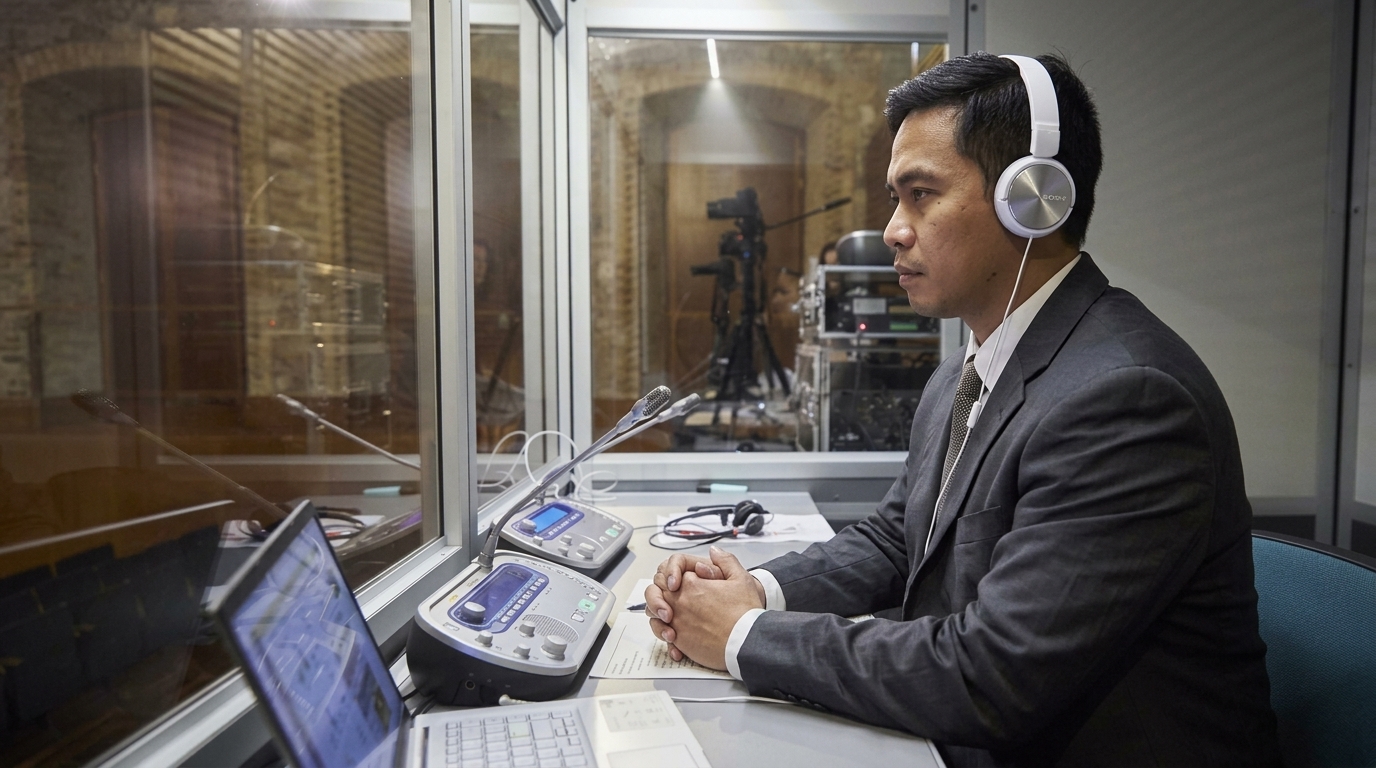
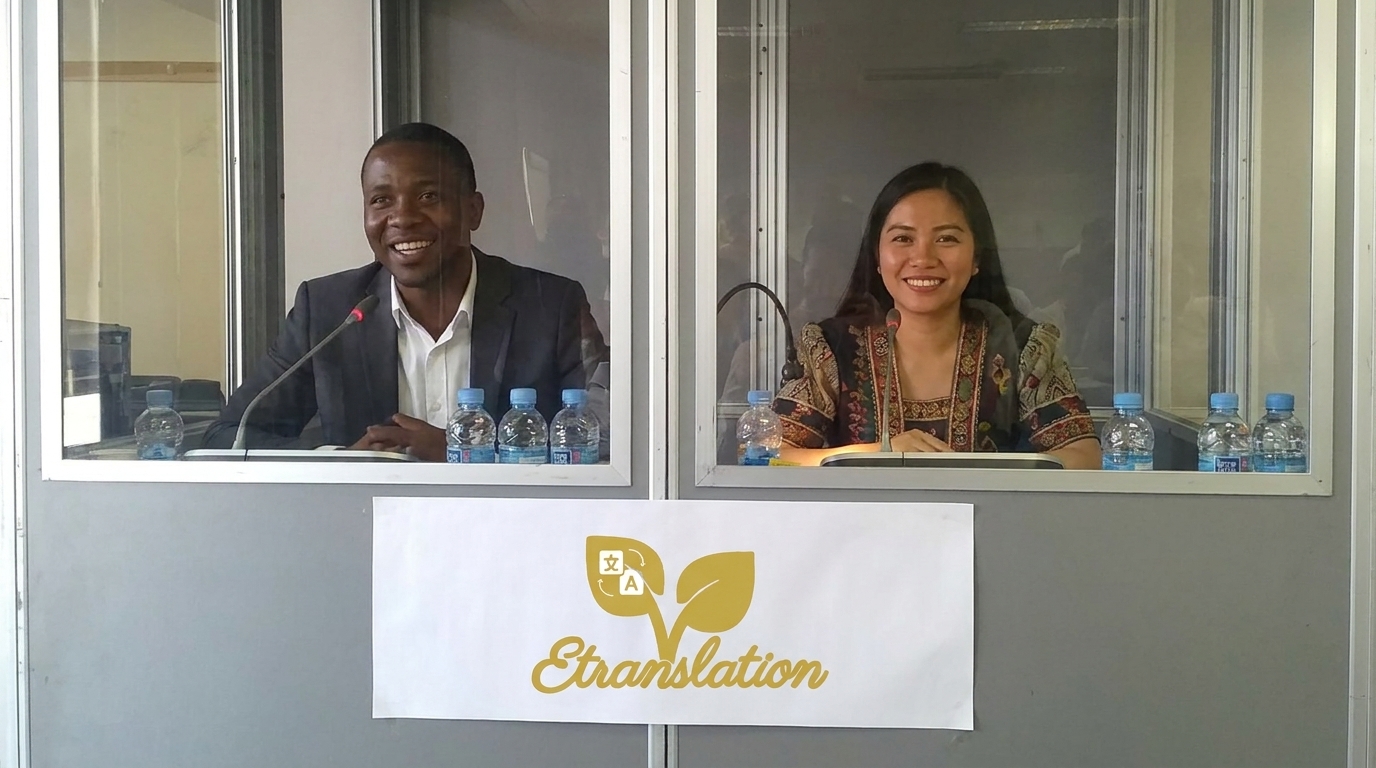
From interpretation booths to multilingual conferences, professional interpretation brings people, language and technology together when communication matters.
Your audience sees the event.
We manage the communication behind it.
Every interpretation assignment has its own language, format, audience and operational requirements. Our role is to bring the right expertise and coordination together so communication can continue.
Interpretation Services
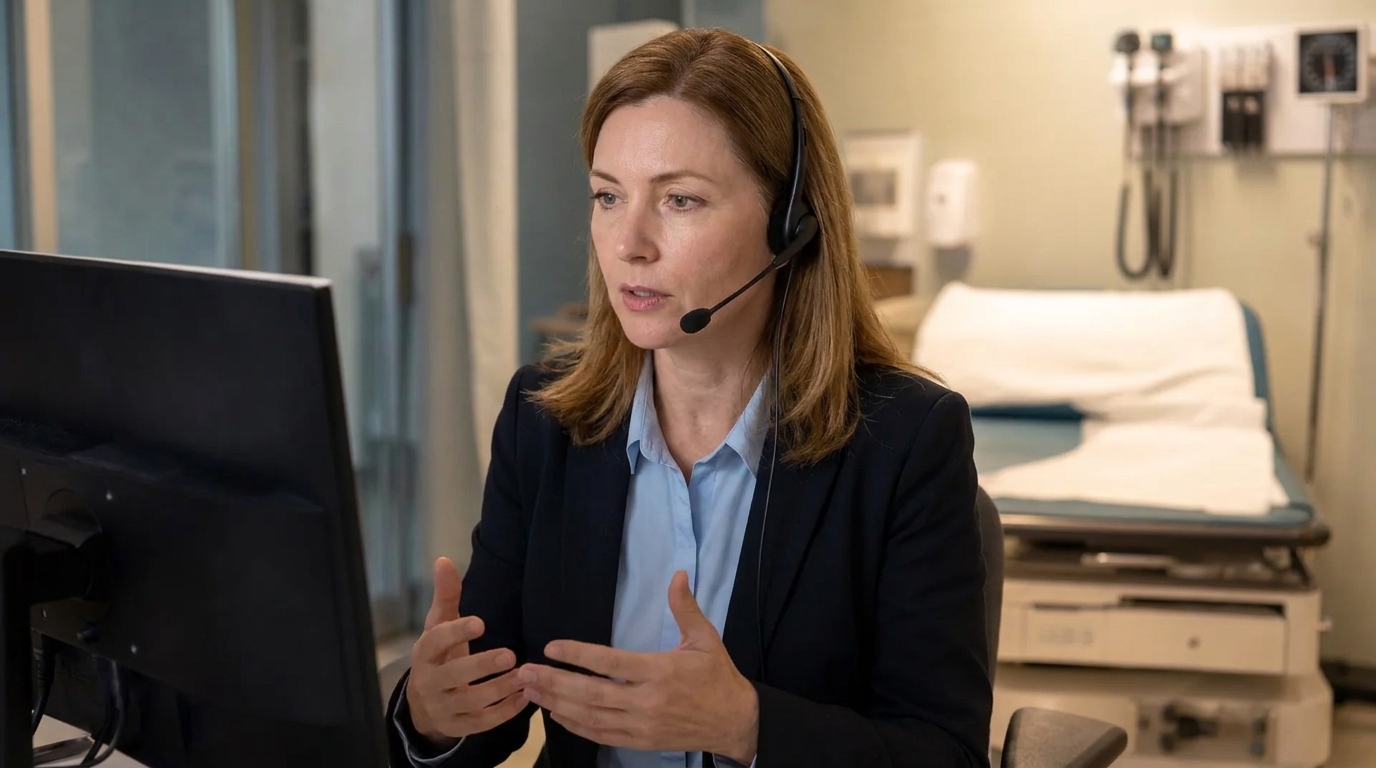
Etranslation provides interpretation services for meetings, conferences, training sessions, hearings and medical appointments where people speak different languages and need to understand each other as it happens. Interpreters work in person or online, in simultaneous, consecutive or whispered mode. Our interpreters have worked in Tagalog, Arabic and French, and we confirm languages, mode, format and schedule in writing before the assignment.
What an interpreter does
An interpreter listens to the speaker, understands the meaning and context, and delivers that meaning in another language while the conversation continues. It is a different skill from translation, which works with written text. Interpreting is usually priced by time rather than by word.
Modes of interpretation
- Simultaneous: the interpreter speaks while the speaker continues. It suits conferences, large events and multilingual meetings, and usually needs booths or a remote platform.
- Consecutive: the interpreter speaks when the speaker pauses. It suits interviews, negotiations, hearings and small meetings.
- Whispered: the interpreter speaks quietly to one or two listeners. It suits short sessions where only a few people need the language.
Delivery formats
- In person: the interpreter is in the room with you.
- Online: interpreters join through a virtual meeting platform, including the meeting room in TranslatorsHub.
- Video remote interpretation (VRI): interpreting over video for appointments and short sessions.
- Over the phone (OPI): interpreting by phone when video is not available.
- Hybrid: some participants in the room and some online, with one interpreting setup.
Where interpreting is used
Conferences and corporate events, board and client meetings, training and webinars, government and NGO programs, healthcare appointments, legal and professional settings, delegations and visits.
What makes an assignment work
The interpreter is the visible part of a larger setup. Before the event we ask for the agenda, presentations, terminology, speaker names and the languages needed. We plan the audio, equipment or platform, and the schedule. On the day, a coordinator keeps the team aligned if the program changes, a language is added or a speaker joins remotely.
Good preparation does not replace expertise. It gives the interpreter the context to handle your subject and vocabulary accurately.
Request interpreters
Tell us the date and time zone, the languages, the format and the number of participants. We confirm availability and price in writing. For short-notice sessions, contact us on WhatsApp.
Request a quoteFrequently asked questions
What is the difference between an interpreter and a translator?
A translator works with written text such as documents and websites. An interpreter works with speech in meetings, appointments and events. Translation is usually priced by volume and interpreting by time.
Which interpretation mode should I choose?
Choose simultaneous for conferences and large audiences, consecutive for interviews, negotiations and small meetings, and whispered when only one or two people need the language.
Can interpreters work online?
Yes. Interpreters can join virtual meetings and webinars, including through the meeting room in TranslatorsHub, or work by video or phone for shorter sessions.
Which languages do your interpreters cover?
Our interpreters have worked in Tagalog, Arabic and French. For other languages, send your request and we confirm availability before quoting.