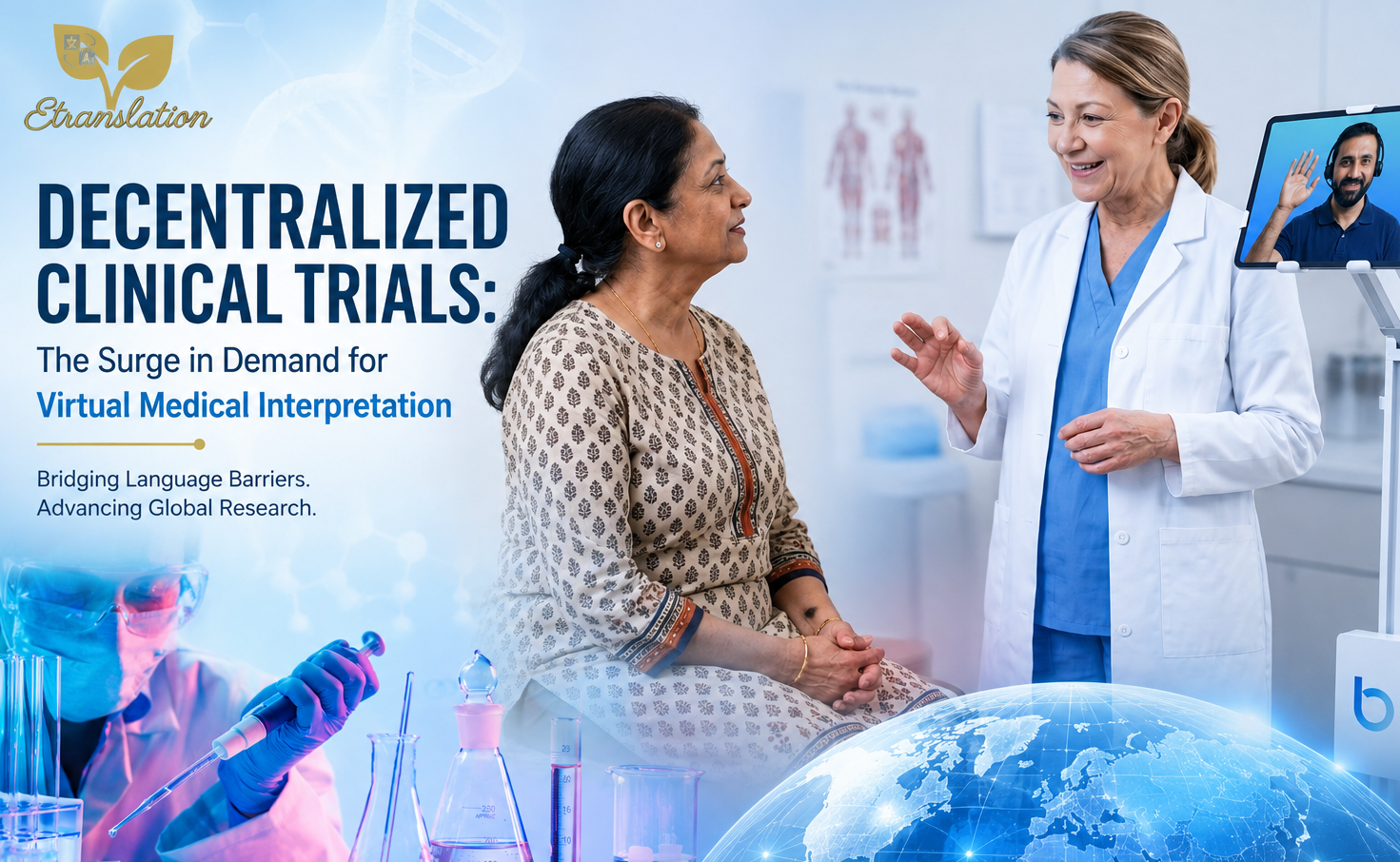
The landscape of clinical research is undergoing a radical transformation. Traditional site-based models are giving way to decentralized clinical trials (DCTs), a model that prioritizes patient convenience while broadening access to life-saving research.
However, as geographic barriers disappear, another challenge becomes increasingly visible: language. As clinical trials become more global and inclusive, the demand for virtual medical interpretation (VMI) has reached unprecedented levels.
The Evolution of Clinical Trial Models
For decades, clinical trials relied on centralized research sites. Participants were required to travel to hospitals or specialized research centers, limiting enrollment primarily to individuals living near major urban hubs.
Decentralized clinical trials are changing this dynamic by bringing research directly to the patient. Through wearable devices, telehealth platforms, mobile applications, and local healthcare providers, sponsors can now collect data remotely and continuously.
Industry experts view decentralization as more than a temporary trend. It represents a structural shift in how modern medicine is developed.
“Decentralization is the only way to ensure that clinical research reflects the actual population that will use the drug. We are finally breaking down the physical walls of the laboratory.” — Dr. Jane Smith, Clinical Operations Consultant
Why Decentralization Requires Virtual Medical Interpretation
As physical barriers fall, linguistic barriers become more apparent.
Decentralized trials frequently recruit participants from diverse ethnic, cultural, and linguistic backgrounds. To preserve ethical standards and maintain data integrity, every participant must fully understand:
- Informed consent documentation
- Dosage instructions
- Study protocols
- Safety reporting procedures
This is where virtual medical interpretation becomes essential.
Unlike traditional on-site interpretation, VMI provides immediate access to qualified medical interpreters through secure video or audio platforms, enabling real-time communication regardless of location.
Key Areas Where VMI Supports DCTs
Informed Consent
Ensures participants fully understand risks, procedures, and expectations in their native language before enrollment.
Telehealth Visits
Facilitates accurate communication between patients, investigators, and clinicians during remote consultations and follow-ups.
Adverse Event Reporting
Allows participants to clearly describe symptoms or side effects without delays or misunderstandings that could compromise patient safety or study accuracy.
Benefits of Integrating VMI into Decentralized Clinical Trials
Integrating virtual interpretation into decentralized clinical workflows provides strategic, operational, and ethical advantages for sponsors and Contract Research Organizations (CROs).
1. Enhanced Patient Recruitment and Retention
Offering multilingual support significantly expands the recruitment pool. Patients are also more likely to remain engaged in a study when they feel understood and supported throughout the process.
Virtual interpretation reduces communication friction and helps prevent participant dropout caused by language barriers.
2. Improved Data Accuracy
Clinical research depends on precision. Misinterpreting a patient’s symptoms or medication feedback can compromise study outcomes and regulatory compliance.
Professional medical interpreters understand both medical terminology and cultural nuance, ensuring communication remains accurate, consistent, and compliant.
3. Cost-Efficiency and Scalability
Coordinating on-site interpreters for remote visits is often expensive and logistically complex.
VMI platforms allow sponsors to scale language support on demand, reducing travel expenses while maintaining flexible access to interpreters across multiple languages and time zones.
Building an Effective Language Access Strategy
To maximize the benefits of VMI, language services should be integrated during the trial planning phase rather than added reactively later in the process.
An effective language access plan should include:
- HIPAA-compliant interpretation platforms
- Qualified medical interpreters
- Multilingual patient support materials
- Easy-to-use communication tools for participants
- Scalable scheduling and on-demand access
Organizations that proactively integrate language access into decentralized trials position themselves for stronger recruitment, better compliance, and improved patient outcomes.
If you are developing a remote clinical research program, explore our Comprehensive Guide to Language Services in Clinical Research to learn how specialized interpretation solutions can support your study.
The Path Forward: A More Patient-Centric Future
The growing demand for virtual medical interpretation reflects a broader industry shift toward patient-centric healthcare and research.
By removing language barriers, decentralized clinical trials become:
- More inclusive
- More equitable
- More scientifically representative
- More operationally efficient
As DCT technologies continue to evolve, the integration of remote monitoring and virtual interpretation will become a foundational standard for global clinical research.
Conclusion
Decentralized clinical trials represent the future of medicine, but innovation alone is not enough. Effective communication remains the foundation of ethical and successful clinical research.
By investing in high-quality virtual medical interpretation, sponsors and research organizations can:
- Protect data integrity
- Improve participant experience
- Strengthen compliance
- Accelerate global study execution
- Deliver new treatments to market more effectively
In a decentralized world, language access is no longer optional — it is mission-critical.

 English
  French
No responses yet